
OVERVIEW
An entire class devoted to learning the basics of cartooning. Students develop a character and learn how to make different facial expressions using symbols that convey extra meaning or action. A finished ink and watercolor cartoon is created in the second half of the session.– – –
Grades 3 – 5
Week of May 28 – June 1
1 Hour & 45 Minutes, or two 52-minute sessions
STANDARDS For This Lesson
SUBMIT YOUR SUMMARY
Copy and paste the text below to send your abbreviated lesson plan with national standards and learning targets to your supervisors and colleagues. Or access the WORD doc by using the blue button below.
– – – – – – – – – – – – – – – – –
Week of May 28 – June 1
OVERVIEW:
An entire class devoted to learning the basics of cartooning. Students develop a character and learn how to make different facial expressions using symbols that convey extra meaning or action. A finished ink and watercolor cartoon is created in the second half of the session.
NATIONAL STANDARDS:
Grade three
Create personally satisfying artwork using a variety of artistic processes and materials.
Grade four
Explore and invent art-making techniques and approaches.
Grade five
Experiment and develop skills in multiple art-making techniques and approaches through practice.
LEARNING TARGETS:
Students know how to how to develop a cartoon illustration using simplification and exaggeration
Students know how to make a final drawing after sketching
LESSON PLAN:
1. Warmup (5 minutes)-Draw your favorite cartoon in pencil
2. Practice (10 min) – draw a realistic character from reference
3. Stylize (17) – Stylize in 3 steps, Show PDF examples
4. Expressions (15) – Use PDFs to look at expressions
5. Rough Sketch (15) – Draw final sketch of character using expression of choice
– – – – – –
Break – end of part one if dividing into 2 sessions
6. Redraw (10) – Draw final character on new sheet of paper
7. Transfer (15) – Transfer drawing to watercolor paper
8. Ink (10) – Ink Drawing, work from top down
9. Watercolor (15) – Add color using markers or watercolor
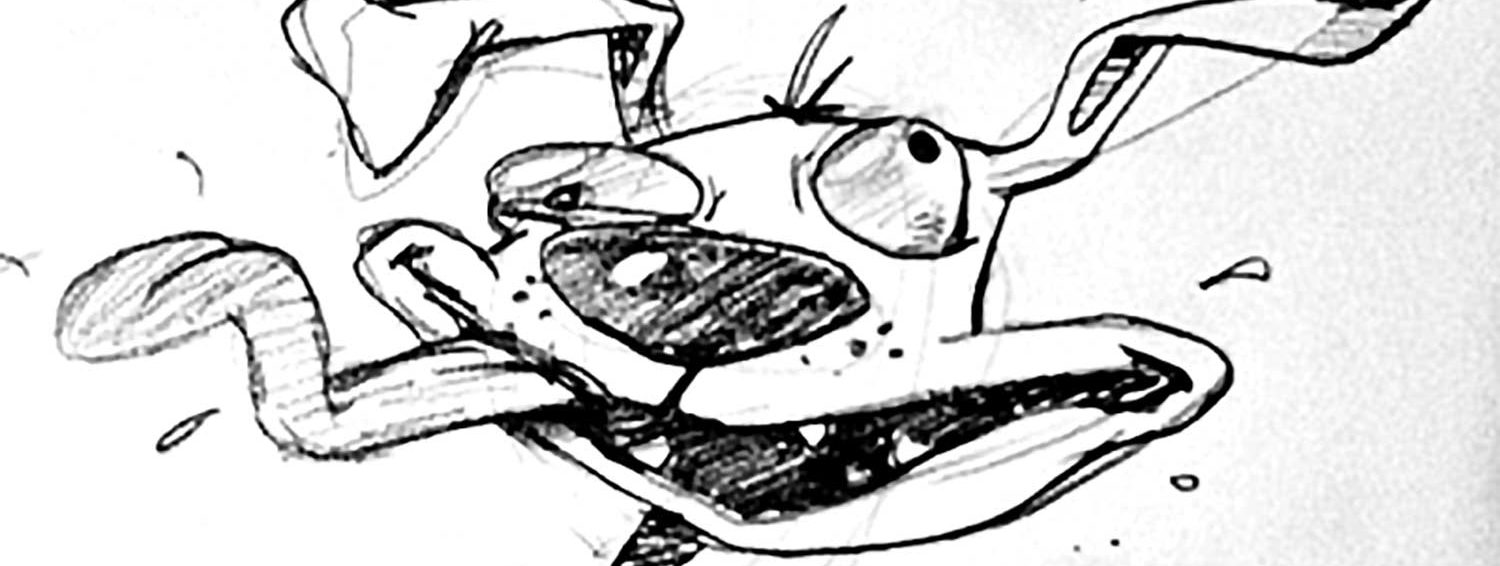
10. Hoppin’ Crazy! (extra) – Draw character jumping with a crazy expression
11. Clean Up (2) – Everyone helps
Tap the Plus Icon (above right) to open STANDARDS information, including an Overview, Learning Targets and a Syllabus. Copy and paste to send to your Administrators or use the button below to download a Word document with the same information that you can add your info to and email to them as an attachment.
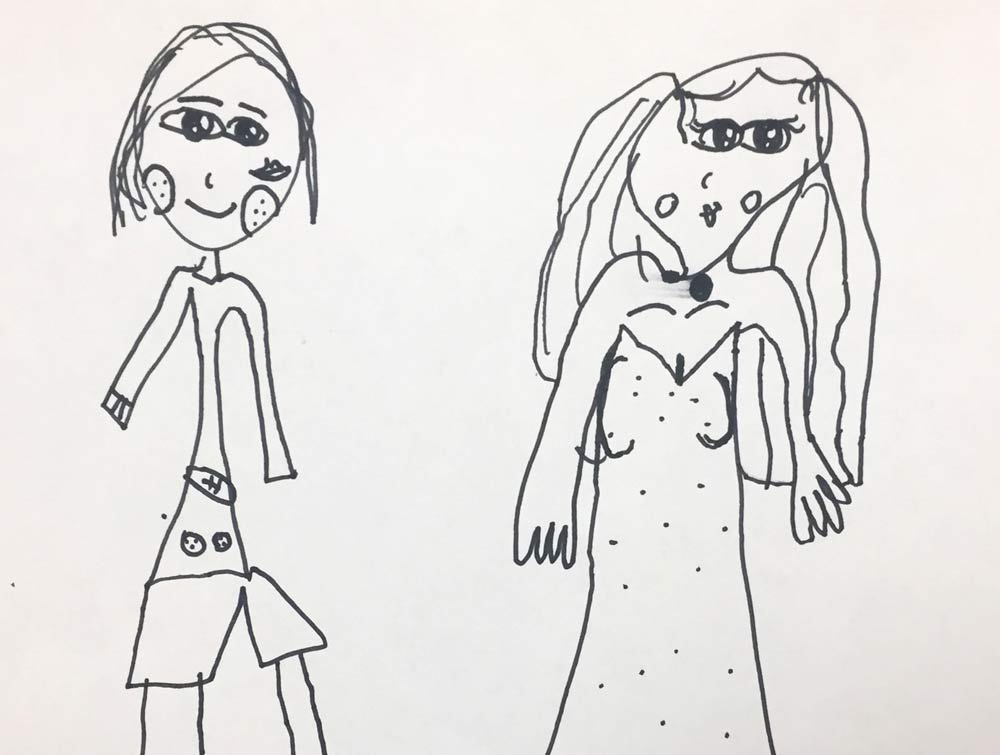
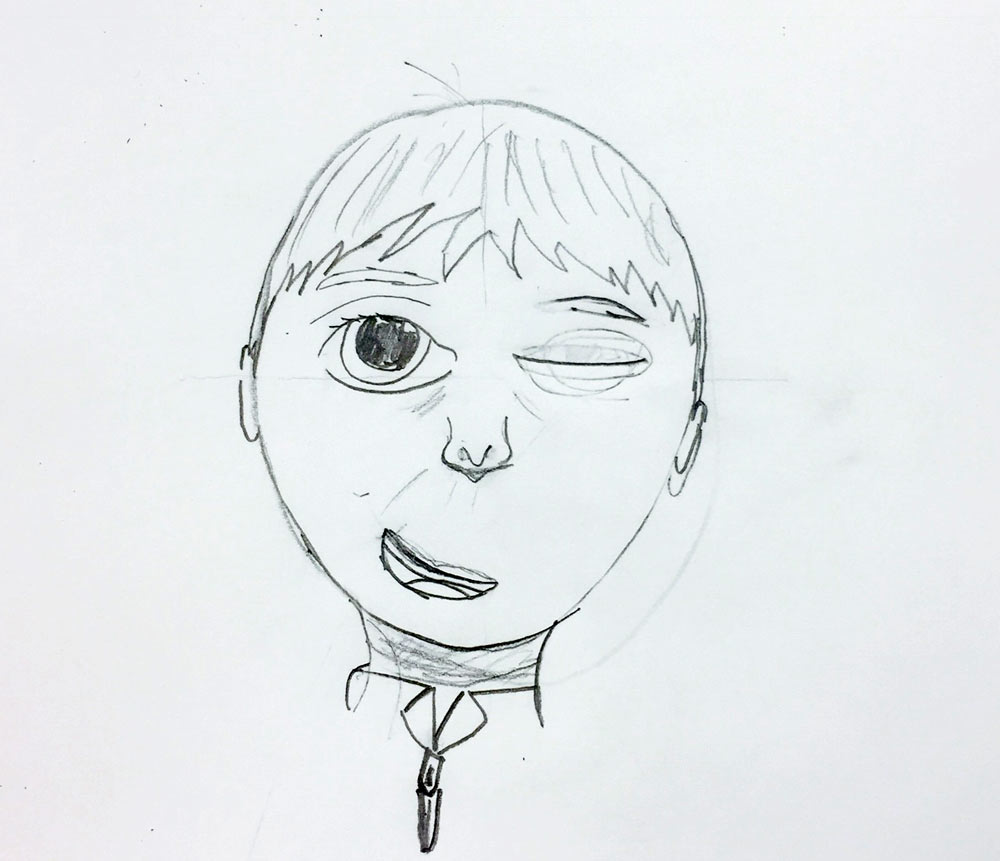
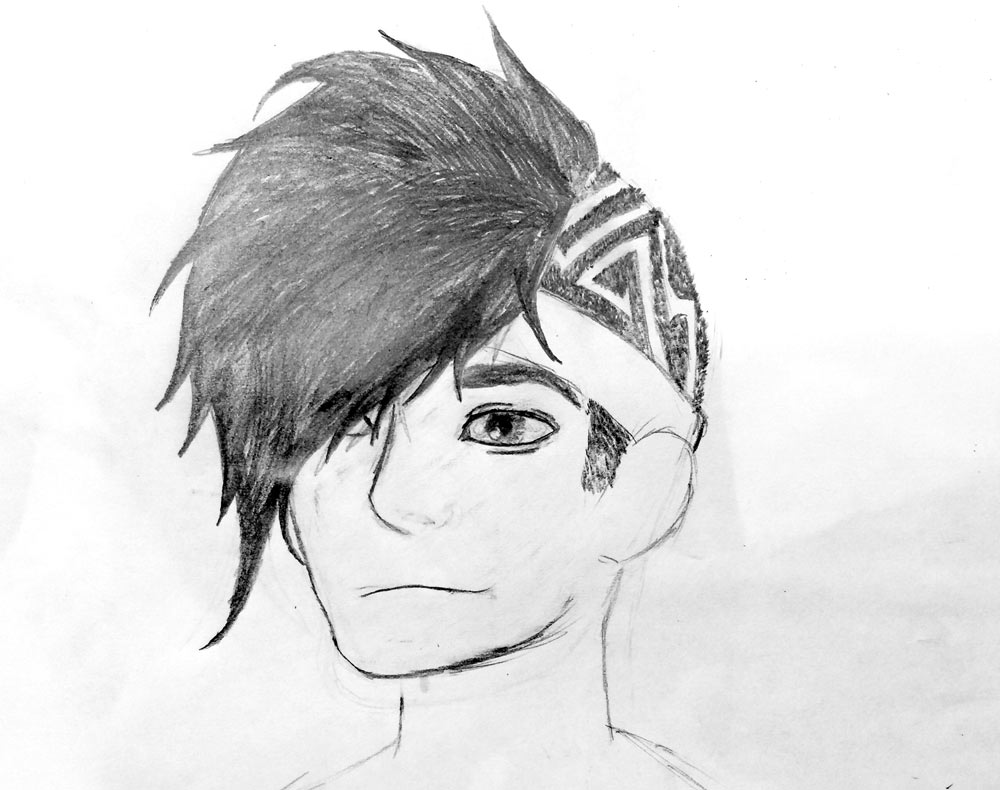
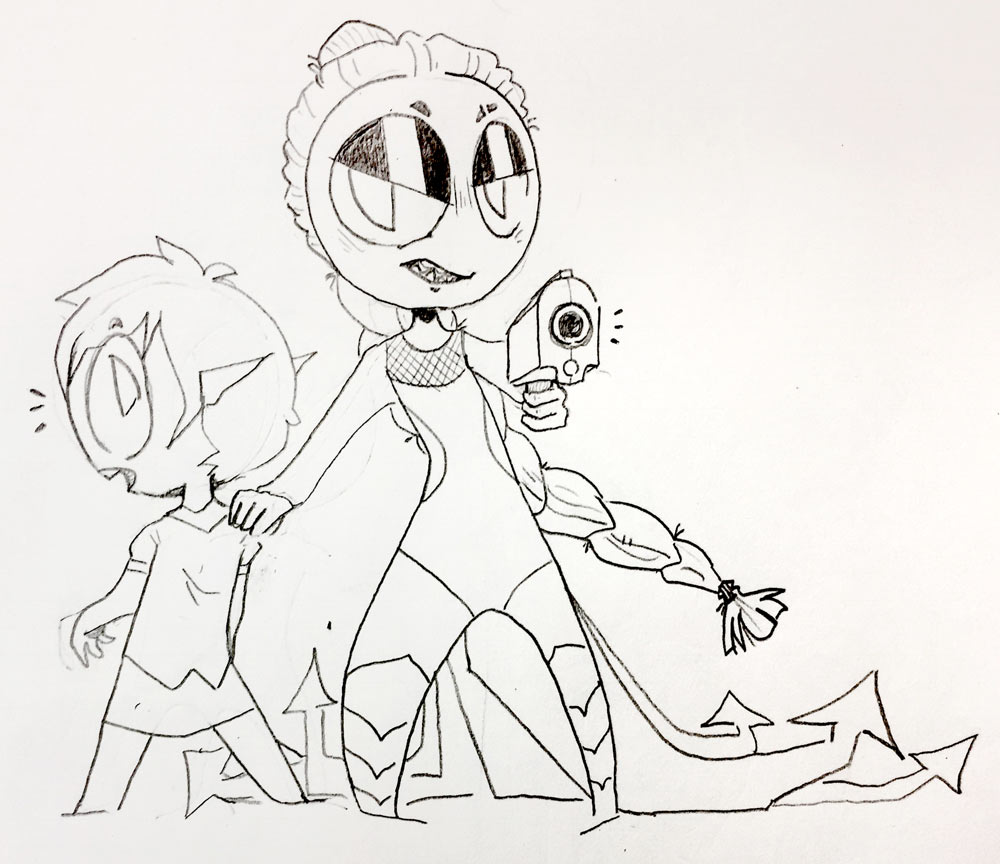
Student Work
SCROLL & TEACH LESSON PLAN
Don’t worry about rewriting anything. Just spend a few minutes reading the lesson plan and printing out your PDFs. Then check out the READY, SET, GO! section and print your prep-page, which includes checklists and an “at a glance” outline of the lesson so you can stay on track when you’re teaching. Set out the materials from the list on your prep page and you’re ready.
That’s all you need to know. Use your smartphone to Scroll & Teach!
Lesson At A Glance
A brief overview of each step. Buttons jump to each section for detailed information.
5 Minutes – Draw your favorite cartoon in pencil
10 Min – draw a realistic character from reference
17 Min – Stylize in 3 steps, Show PDF examples
5 Min – Use PDFs to look at expressions
15 Min – Draw final sketch of character using expression of choice
B R E A K
10 Min – Draw final character on new sheet of paper
15 Min – Transfer drawing to watercolor paper
10 Min – Ink drawing. Work from top down.
15 Min – Add color using markers or watercolor
Extra – Draw character jumping with a crazy expression!
2 Min – Everyone helps
Use this button to jump down to the preparation section.
SCROLL & TEACH
LESSONPLAN
Each section is a different color. Read over once and then you can SCROLL & TEACH using any device you like. It’s designed to work best with your phone.
LEARNING TARGETS

Students attempt a cartoon drawing as a base to learn from – having some struggle in the first step leads to better learning later
M A T E R I A L S
- 14″ x 17″ Sketch Paper
- 4B pencil
- White Eraser
All materials are suggestions and may be modified as you see fit. We have tried many items, and these seem to allow the most versatility for the cost.
1.1 draw
Have students draw their favorite cartoon in pencil. This is a fast warmup today.
It can be student’s own character, or from another source such as a tv show, but it must be made from memory and/or imagination. If they’re having trouble with ideas, use one of the following…
Brain Boosters:
- Dog
- Fish
- Old wise man
- Crazy scientist
Advanced Student Lesson
CREATIONS - tap here to open
Our Creations lessons are for students who have completed the two years of Foundations and are ready to begin using all that they have learned to create new work. These more challenging versions of the same concepts and techniques are easily taught along-side students in the Foundations course. This allows for excellent review, and is encouraging for students to see progress from each viewpoint.
Use the Student Instructions printout below to distribute to your Creations students. Tap the image to open the PDF in a new window.
Cartoons or Artists’ Choice
Overview: Students can choose between creating their own cartoon or artists’ choice using dry media or ink.
Cartoon Scene
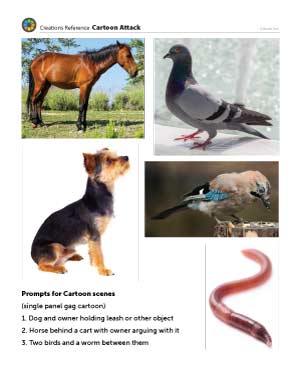
Develop 2 or 3 characters who are talking, with one showing an extreme expression. Props can be used to make the scene more interesting. Some suggestions to get them started are below. Captions can be added by the artist, or the advanced students can work on them together after creating the drawings.
- Dog and owner holding leash or other object
- Horse behind a cart with owner arguing with it
- Two birds and a worm between them
Cartoon Expression Practice
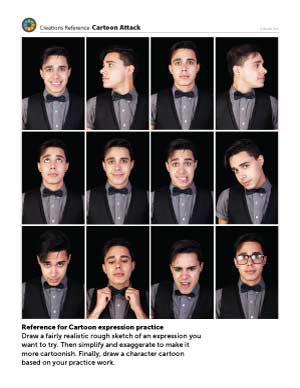
Or create sketches of a man with several expressions. First draw one fairly realistically, then simplify and exaggerate. Finally, draw a character based on the practice sketches.
Artists’ Choice
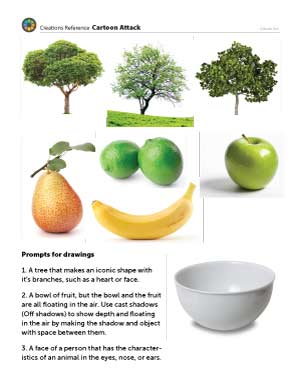
Create a drawing of one of the following ideas in pencil, oil pastel, or ink.
- A tree that makes an iconic shape with it’s branches, such as a heart or face.
- A bowl of fruit, but the bowl and the fruit are all floating in the air. Use cast shadows (Off shadows) to show depth and floating in the air by making the shadow and object with space between them.
- A face of a person that has the characteristics of an animal in the eyes, nose, or ears.
Tap images to open Creations Student Instructions and Reference Materials in new windows. There are 3 reference sets.
1. Cartoon photo reference of animals
2. Expression photo reference
3. Two-page drawing references
1
Cartoon Animal Reference One-Page

2
Expression Reference
One-Page
3
Drawing Photo Reference Two-Pages
Use this button to jump down to the preparation section.
LEARNING TARGETS
Students know how to extrapolate ideas from photo reference
M A T E R I A L S
- 14″ x 17″ Sketch Paper
- 4B Pencil
- White Eraser
2.1 Print
Reference
Toon Photos
Cut images apart and print enough for each student to choose from several.
Hand out reference prints. Set all of the images out on a table or counter, and let groups of students come choose what they want..
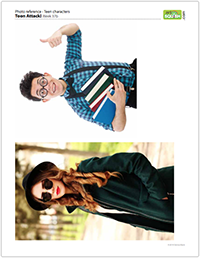
3 Pages – Opens in new window
2.2 draw
Use the reference to draw a somewhat realistic version of a character.
Choose from these 4 different types of characters:
- Space Animal – photo: Rat
- Anime Hybrid Girl – photo: girl
- Cute Animal – photo: panda
- Brainy Teen Guy – photo: boy
Allow students to interpret these ideas and create their own cartoon drawing, but emphasize that the reference photo is very important. Explain how professional cartoon artists usually erase and redraw often, or begin completely over to redraw. Only by re-drawing can a character be developed.
Use this button to jump down to the preparation section.
LEARNING TARGETS
Students know how to how to develop a cartoon illustration using simplification and exaggeration
M A T E R I A L S
- 14″ x 17″ Sketch Paper
- 4B pencil
- White Eraser
3.1 Print
Reference
Toon Examples
Either let students share around or you can cut images apart in the matching sets.
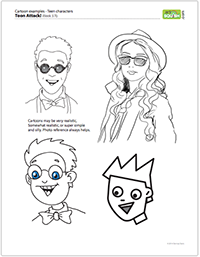
2 Pages – Opens in new window
3.2 Draw
Artists stylize in three steps, using these 2 methods of cartooning: Exaggerate and Simplify.
Explain to your students how to apply the 2 basic cartoon methods of simplification and exaggeration. You can do this in 3 steps:
- Step 1: simplify the biggest shapes and remove unnecessary features.
- Step 2: exaggerate and simplify some more
- Step 3: refine the shapes, simplification, and exaggeration
As your class works, you can show them some of the Pinterest examples of cartoons if you like. For the examples they’re working on, though, hold off on the PDF we have provided. Allow your artists to try on their own instead of simply copying other artists’ work.
Provide the examples PDF pages of cartoons, after your students have made their own attempts. It’s ok to compare your work, if you realize that a professional cartoonist created these examples from the same references. Naturally, student work is going to look different. Make sure your student’s realize this and encourage them to work hard and learn by practice. The cartoonist who did all of these created some very horrible cartoons for many years before becoming a professional!

Pinterest Gallery – Cartoon Animals
Tap the icon to the left to open our special Pinboard showing examples of artwork to display to your class. See our Article for making Pinterest work on larger displays. You can also use a laptop or large tablet and gather everyone around like you’re using a book.
Explain the important concept of re-drawing. This is essential to good cartooning. To simplify and exaggerate, you have to look at what you’ve done, and then redraw it. professionals tend to redraw using tracings and starting over, but also using colored pencils first, and/or erasing old work to redraw new versions. Students will want to erase to redraw, and that’s ok.
“Don’t try to do everything all at once. Any professional cartoonist will tell you that their work improves every time they re-draw it. Just do each step, one at a time. I’ll give you prompts. We begin with the big shapes…”
Use this button to jump down to the preparation section.
STEP 4. Expressions
Students will create moods with different expressions in their drawings 5 MinutesLEARNING TARGETS
Students know how to add expression to their cartoon drawings
M A T E R I A L S
- 14″ x 17″ Sketch Paper
- 4B pencil
- White Eraser
4.1 print
Reference
Symbols
Various symbols used in cartooning to convey action and emotions.
Hand out prints. Make sure each student gets one to keep. If your students keep notebooks or binders, you can 3-hole punch them ahead of time.
These were also used in Foundations 2B, so some students should still have them.
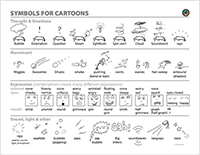
1 Page – Opens in new window
4.2 print
reference
Three Expressions
Examples of 3 expressions, each ranging from mild to extreme.
Hand out prints. Make sure each student gets one to keep. If your students keep notebooks or binders, you can 3-hole punch them ahead of time.
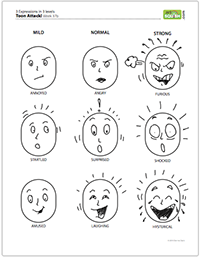
3 Pages – Opens in new window
4.3 learn
Use PDFs to show students how to create expressions in cartoons.
Symbols are important for cartoons, to convey action and mood.
Provide the 2 PDFs and have students look them over. These are handy references for cartoonists to have! The 3 expressions shows how to use symbols to create 3 versions of each expression: mild, normal, and strong. If you have time, talk about what makes each expression more extreme. Emojis use some of these keysigns too.
- Annoyed – Angry – Furious (mouth, eyes and brows all become larger and more exaggerated)
- Startled – Surprised – Shocked (mouth and eyes become taller or more open. Pupils get smaller and brows higher)
- Amused – Laughing – Hillarious (mouth gets larger. eyes curve up and become closed, crying)
Use this button to jump down to the preparation section.
STEP 5. Rough Sketch
Students will create a rough sketch of their character using expressions 15 MinutesLEARNING TARGETS
Students know how to draw rough ideas before final work
M A T E R I A L S
- 14″ x 17″ Sketch Paper
- 4B Pencil
- White Eraser
5.1 sketch
Have students draw one sketch of the character using one of these expressions. Students should take their time and erase as often as needed. It doesn’t have to be perfect though. We will redraw it one more time.
TIP
It is much easier to use a mild expression since body language and position contribute to the extreme versions.
Use this button to jump down to the preparation section.
LEARNING TARGETS
Students know how to make a final drawing after sketching
M A T E R I A L S
- 14″ x 17″ Sketch Paper
- 4B Pencil
- White Eraser
6.1 draw
Have students carefully draw their final character sketch on a new sheet of copy paper.
Encourage erasing and correcting to make a finished drawing as good as they can make it.
Use this button to jump down to the preparation section.
LEARNING TARGETS
Students know how to transfer a drawing
M A T E R I A L S
- Cartoon drawing on sketch paper
- Ebony pencil
- White Eraser
- Watercolor Paper
- Blue Painter’s Tape
7.1 trace
Have students transfer their drawing onto watercolor paper.
If you coat the back of the drawing with graphite, the paper can be taped to a piece of watercolor paper and transferred by tracing over the original lines again. Here’s how.
1. Turn the drawing upside down, and place on a scrap sheet of paper or the back of a drawing pad.
2. Coat the back with graphite. Hold a soft-lead pencil (4B, or Ebony), sideways, so that the graphite tip is resting on the side instead of the tip. Rubbing over the back of the cartoon drawing, you can quickly coat it with a layer of graphite. Take care to make sure every area of the drawing has the graphite under it. MAKE SURE no one is covering the front of their drawing or the drawing will be lost!
3. Turn the paper right-side up again.
4. Tape the drawing on top of watercolor paper. Make sure the drawing is showing, with the graphite coating facing down. Use a few bits of painters’ tape on each corner. If the drawing paper is too large for the watercolor paper, tape the watercolor paper down first, to the table.
5. Trace over the cartoon drawing lines. Make sure you don’t miss any areas!
6. Remove the original drawing and tape.
Use this button to jump down to the preparation section.
LEARNING TARGETS
Students know how to ink over a final drawing
M A T E R I A L S
- Drawing on watercolor paper
- fine-tipped waterproof marker OR
- dip pen with waterproof India Ink
8.1 ink
Artists ink their drawings.
Use a fine-tipped marker pen (waterproof!) or a dip pen with waterproof india ink, and work from the top down so you don’t smear the ink. Allow it to dry for a couple of moments while you get out watercolors or acrylics to make watercolors. If you have markers, these can also be used.
If students want to erase the graphite, it will come up easily with a kneaded eraser. However, you must be 100% sure it is dry or the eraser will smear the ink.
Redrawing
This is the final art. Instead of tracing and blindly following the lines, an artist should approach this version as if it were a fresh new drawing. Every line should be drawn with the idea that it can be improved, as opposed to simply copied (traced).
Use this button to jump down to the preparation section.
LEARNING TARGETS
Students know how to watercolor a cartoon
M A T E R I A L S
- Inked drawing
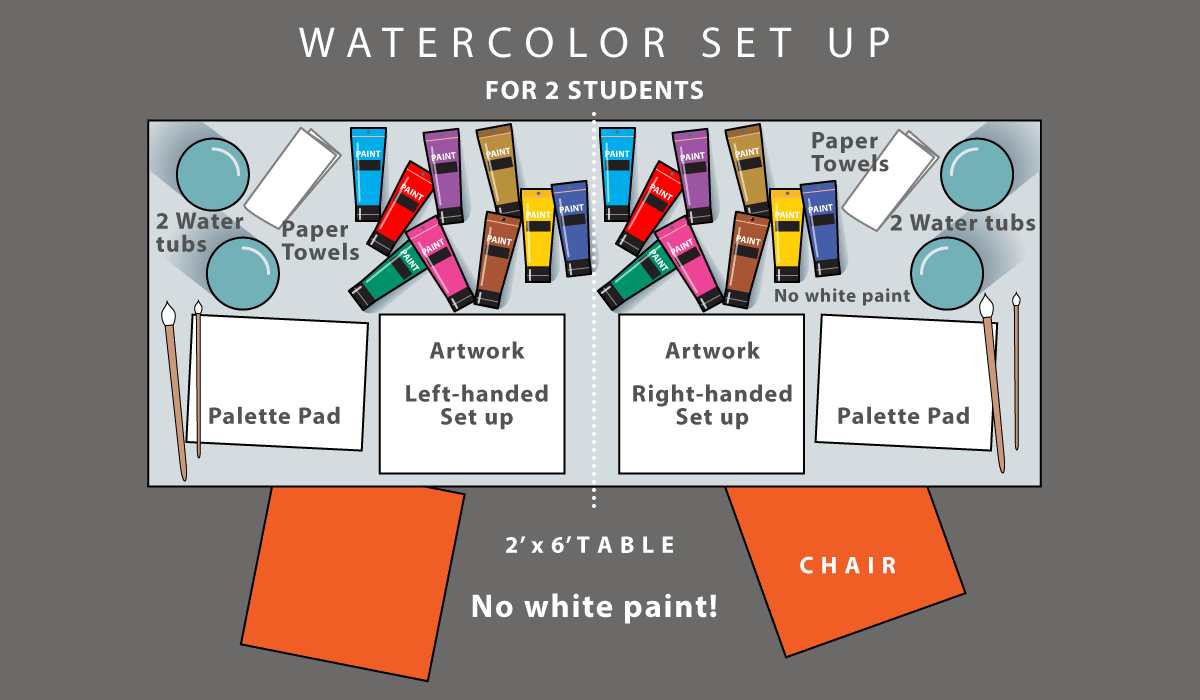
- Watercolors
- Markers
- Paper towels
- Water containers
- Brushes – Small
Brushes should be nylon for springiness and durability. Round brushes are the most versatile.
Paint pigment list:
- Napthol or Pyrrol Red
- Hansa or Light Yellow
- Pthalo Green (blue shade)
- Cyan or Cerulean Blue
- Ultramarine Blue
- Dioxazine Purple
- Magenta
- Burnt Umber
- Raw Sienna
9.1 paint
Guide students into adding color using markers or watercolors..
Keep the colors very simple, with only 4 or 5 main colors.
After drying, more layers can be added to create brighter colors and to add shading on the edges.
TIP
Shading should always be on the bottom edges and one side’s edges. For instance, if shading is on the right, never shade any left edge at all.
Use this button to jump down to the preparation section.
STEP 10. Hoppin' Crazy!
Extra for early finishers. Students will draw their characters with loads of expression! If TimeLEARNING TARGETS
Students know how to draw cartoons with a lot of expression
M A T E R I A L S
- 14″ x 17″ Sketch Paper
- 4B Pencil
- White Eraser
10.1 draw
Draw your character jumping up and with the most extreme, crazy angry or freaked out expression as possible!
Think of the keysigns and how they can be used. Also consider the action of the body.
Use this button to jump down to the preparation section.
LEARNING TARGETS
Students know the importance of cleaning up.
M A T E R I A L S
- Paper Towels
- Cleaning wipes
- Sink
- Waste baskets
- Well-lit spot for photos
- Camera or phone-camera
11.1 CLEAN
Students set up their work area.
- Wash hands
- Super-wash brushes if used
- Put art supplies away
- Wipe tables & toss trash
- Remove any smocks (last)
- Check for items on floors and tables
11.2 PHOTO
Try to get photos of your student’s artwork. Find a good spot for quick lighting without highlights or shadows from your hands and device. Ideally in-between two strong lights on each side.
11.3 CONNECT
Make sure you see the kids connect with parents and tell them about the class if you can!
%
Insights
This lesson provides understanding
%
Technique
This lesson shows application and movement
%
Self Expression
This lesson allows personal freedom
OBJECTIVES
- Practice and improvement drawing cartoon characters
- Understanding how simplifying and exaggerating helps a cartoon
- Accomplishment in making a finished ink and watercolor cartoon
- Fulfillment by creating the character from start to finish
TROUBLESPOTS
Negative self-talk – “I’m horrible at this” is something you never want to hear your students say to themselves, but it is all too common. If you see frustration and defeat in a student, ask what’s going on and try to help. If they say things about themselves that are false declarations of their value and abilities, there are several things you can and should do.
- Add the word, “yet” when hearing something like, “I’m not good”.
- Ask your student “would you say that to your friend sitting right next to you? No! of course not. You are not mean, and it’s not true. So why are you being mean and untruthful to yourself?” AND “Do you hold yourself to a standard that no one else can live up to?”
- Another statement: “It is impossible for you to be the artist you want to be by time-traveling to your own future. You have to learn to be that artist, and that means creating work that is called a ‘LEARNER’. You can’t time travel. It takes work. You must create art that you do not like.”
- “Artists are never born masters. Otherwise we would see museum pieces by baby Michelangelo, or baby Da Vinci.”
ART WORDS
Keysigns – This is an ArtSquish term we use to describe all the little cartoon elements that are used as symbols of extra meaning or actions, such as an exclamation point floating over a head to show surprise.
Stylize – When you take a realistic drawing and simplify it, and exaggerate elements such as size or outlines, this becomes a stylized work. If the work is also funny or shows people in a story-telling fashion, it is also called a cartoon.
Transfer – Any time that you move the art from one surface to another. Today we are using graphite on the back of a drawing to transfer it to new paper.
CLASSROOM
PREP
Print all of your PDFs from the lesson plan and cut any references apart as needed.
What your room needs
Here are your printable lists and room prep instructions.
Opens in new window
CLASSROOM
MATERIALS
- Markers
- Paper towels
- Water containers
- Camera or phone-camera
STUDENT’S
MATERIALS
- 14” x 17” sketch paper
- 4B Pencil
- White Eraser
- Ebony Pencil
- Watercolor Paper
- Blue Painter’s Tape
- Fine-tipped waterproof marker OR
- Dip pen with waterproof India ink
- Watercolors
- Brushes- small
Use this button to view our parent’s blog. Share the link: http://parentart.org, with your student’s parents so your they can read about the lesson each week.